
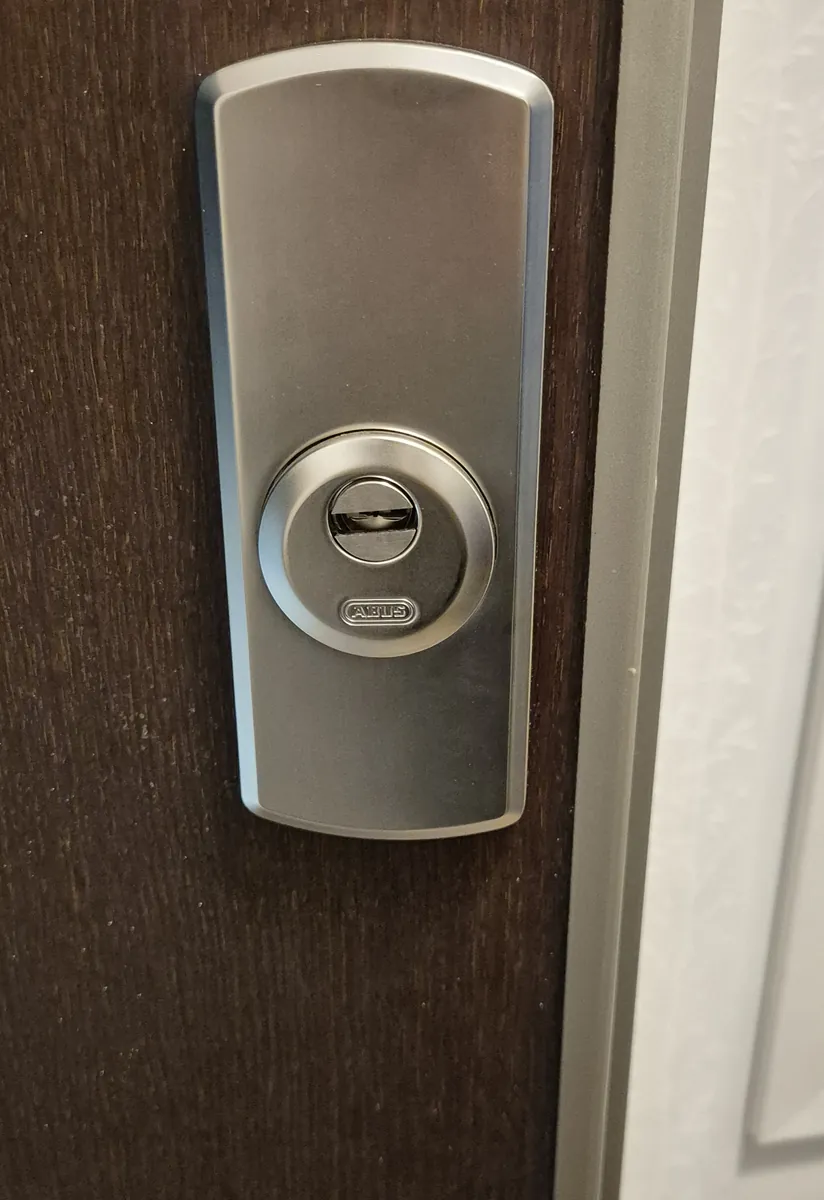
What an escutcheon does
Its job is to put a barrier around the cylinder against direct attacks. There are different designs and grades, from standard guards to systems with additional covering parts.
- Reduces cylinder exposure
- Protects the outer area of the cylinder
- Must be fixed properly
- Has to be compatible with the lock
Cylinder, escutcheon and lock work together
One idea is worth keeping in mind: fitting a security cylinder is not enough if it can still be reached from outside. The final protection also depends on the lock, the door, the frame and the quality of the installation.
- Cylinder of the right size
- Compatible protective escutcheon
- Lock in good condition
- Undamaged door and frame
When to have the escutcheon checked
It may be worth asking for an assessment when the cylinder sticks out, the guard is loose or damaged, the cylinder is changed, you buy a home or there has been a break-in attempt. These situations do not always mean a replacement: first, the whole setup is checked.
What is checked before fitting
We measure the cylinder and the door thickness, and check the fixing system, compatibility with the lock and the space available. A wrongly sized escutcheon can make the key hard to use or fail to give the expected protection.
Fitting and maintenance
After fitting, the key should turn normally, with no rubbing or play. It is worth checking the escutcheon if it takes a knock, shows corrosion or the lock starts to behave differently.
